Customize Your Pet Sitting Insurance
Turn the work you actually do into a precise activity list, then ask for the coverage wording that fits each exposure.
What matters on this page
Use these checkpoints to frame the literal question before reading the full guide.
Customize pet sitting business insurance around the animals, property, people and services in your care. The practical starting point is an activity schedule plus the actual liability and animal-care endorsements. Public product descriptions help identify questions, but we could not verify a complete dated state-specific business policy pack, so no scenario below is represented as covered.
The sections below show how to verify the answer and what can change it.
A sitter adds one service: what must change?
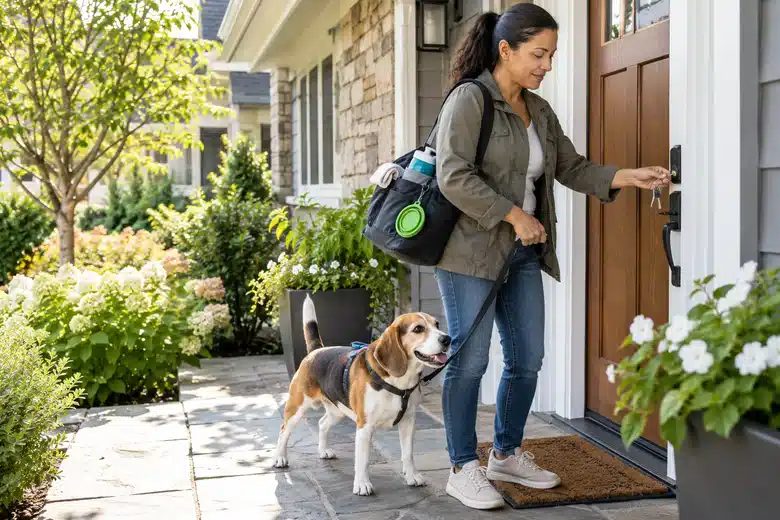
Consider a hypothetical solo sitter who makes home visits and now wants to offer transport to the veterinarian and help administer an owner-provided medicine. The activity has changed even if the business name has not. Before accepting the new service, the sitter needs to describe where it happens, who performs it, how animals are restrained or handed over and what instructions are followed. No premium, limit or claim payment is assumed in this example.
Write the ordinary service and the new service side by side. Include overnight stays, the maximum animals under care at one time, use of subcontractors, access to keys, work in the sitter’s own home and any bathing or training. The most useful customization request is concrete enough for an insurer to identify the relevant provision or say that an activity is outside its product.
Activity-to-wording map
| Business activity | Exposure to investigate | Policy or endorsement needed | Exclusion or boundary to resolve |
|---|---|---|---|
| Visits in a client home | Injury to a pet and damage to household property | Animal care/custody/control plus property-damage wording | Whose property is entrusted to the sitter? |
| Walking and handovers | Escape or injury during a transfer of control | Animal-care and third-party liability terms | Who is an insured person at the handover? |
| Giving an owner-provided medicine | Mistake in a professional service | Exact service description and applicable liability wording | Is the activity accepted, restricted or excluded? |
| Transport to a clinic | Animal injury and vehicle-related liability | Animal transport plus applicable motor coverage review | Do not assume one endorsement answers both exposures |
| Hiring a substitute sitter | Actions of another person | Insured-person and subcontractor definitions | Must the person or business be named? |
| Holding client keys | Loss, access and rekeying expense | Lost-key wording and schedule | Which locks, events and costs qualify? |
Walking and handovers
Giving an owner-provided medicine
Transport to a clinic
Hiring a substitute sitter
Holding client keys
What the public sources do and do not prove
Pet Care Insurance’s current product description distinguishes liability for harm to animals in care from a veterinarian-expense reimbursement feature. It also warns that the actual policy can be more restrictive than its brief descriptions. Treat these as different questions to ask: whether the sitter is legally responsible for a loss, and whether a particular expense benefit can respond without that finding.
Pet Sitters Associates says its master policy is in the member resource library and instructs members to match the policy number. We did not access that member document. An FAQ describing options cannot establish the wording, endorsement edition or state conditions for this hypothetical business. A covered-claim story on a sales page is also not a ruling on your different circumstances.
The US Small Business Administration distinguishes general liability from professional liability for service errors and negligence. That general framework helps organize the questions, but it does not establish that a pet-sitting activity is covered by a particular policy.
Coverage conclusion unavailable
No complete current state-scoped specimen, endorsement schedule and named activity record was obtained. The scenario is therefore a preparation exercise. Obtain and read the actual pack before treating a service as insured.
Trace the hypothetical incident without promising a payment
Eligibility, event and payment are three separate reviews
Eligibility: check that the business, service location, worker and described transport or medication activity are within the policy.
Event: establish what happened, when control transferred, which pet or property was harmed and whether a liability or expense trigger is relevant.
Exclusions: read the restrictions applicable to that activity; request an exact section citation rather than an informal yes.
Payment: only after the earlier checks, identify the applicable sublimit, aggregate, deductible and treatment of defense costs.
Change control: keep the written endorsement and its effective date; do not assume a later purchase applies to an earlier incident.
For the sitter in the example, a revised certificate would be a useful verification document, but it would not replace the endorsement text. Compare the policy schedule with the service agreement offered to clients. If the documents describe different work, resolve that mismatch before relying on either. Keep the owner’s veterinary instructions in the operational record without assuming those instructions create insurance coverage.
Make the request easy to answer
Prepare a short description of your services, locations, staff arrangement and largest simultaneous group. Ask the insurer to mark each accepted activity, cite the controlling clauses and list anything requiring a separate endorsement or policy. Then request the total premium change and the date on which the change would take effect. This guide does not establish a licensing obligation or recommend a particular limit; those depend on the business and jurisdiction.
Common questions
Does an owner’s pet health policy insure my pet-sitting business?
Do not use an owner’s veterinary-expense policy as evidence of the business’s liability cover. Obtain the business documents for your own services.
Can I rely on a certificate alone?
Use it to check names, dates and listed coverage, then verify the actual policy and endorsements behind it.
Independent references
These links provide independent government, academic or reference background. Actual policy wording controls insurance eligibility, benefits and claims.
Looking for dog or cat veterinary insurance?
This article does not imply that the specific animal, liability product, state or service discussed above is covered by the site's partner. If you are separately comparing medical insurance for U.S. domestic dogs or cats, the next button opens a separate quote route for that product; check the actual policy for eligibility and exclusions.